Brushing and Flossing Techniques for Healthy Gums
Expert Dental Care Tips to Prevent Gum Disease and Maintain Your Beautiful Smile
Healthy gums are the foundation of a beautiful smile, yet nearly half of American adults aged 30 and older suffer from some form of gum disease. At Independence Dental, we’re committed to helping our patients achieve optimal oral health through education, prevention, and exceptional dental care. Our experienced team understands that the key to preventing gum disease starts at home with proper brushing and flossing techniques. While most people brush their teeth daily, many aren’t using the correct methods to effectively remove plaque and protect their gums from inflammation and infection. Gingivitis, the earliest stage of gum disease, affects over 50 percent of adults and causes red, swollen gums that bleed easily. The encouraging news is that gingivitis is completely reversible with proper oral hygiene and professional dental care. Whether you’re dealing with bleeding gums, want to prevent future problems, or simply want to improve your daily routine, this guide will walk you through the essential brushing and flossing methods that dental professionals recommend.

Why Proper Technique Matters More Than You Think
Many people assume that brushing harder means cleaner teeth, but this common misconception actually causes more harm than good. Aggressive brushing damages tooth enamel and irritates gum tissue, potentially leading to gum recession and tooth sensitivity. According to the Centers for Disease Control and Prevention, 42 percent of adults aged 30 and older have periodontitis, a serious form of gum disease that causes bone loss around teeth. Among adults 65 and older, this number jumps to nearly 70 percent.
The difference between healthy gums and gum disease often comes down to how effectively you remove plaque. Plaque is a sticky film of bacteria that constantly forms on your teeth. If plaque isn’t removed through proper brushing and flossing, it hardens into tartar within 24 to 72 hours. Once tartar forms, only a dental professional can remove it. The statistics reveal that adults who don’t floss regularly have a 53 percent rate of periodontitis compared to those who maintain consistent interdental cleaning habits.
The Right Way to Brush Your Teeth
The American Dental Association recommends brushing twice daily for two minutes each session using fluoride toothpaste. Follow these essential steps for optimal results:
Proper Brushing Technique:
- Use a soft-bristled toothbrush (medium or hard bristles damage gums and enamel)
- Hold your toothbrush at a 45-degree angle to your gum line
- Use gentle, circular motions rather than aggressive scrubbing
- Spend about 30 seconds in each quadrant of your mouth
- Clean outer surfaces, inner surfaces, and chewing surfaces of all teeth
- Tilt the brush vertically for inner surfaces of front teeth
- Don’t forget to brush your tongue to remove bacteria
- Replace your toothbrush every three to four months
Mastering the Art of Flossing
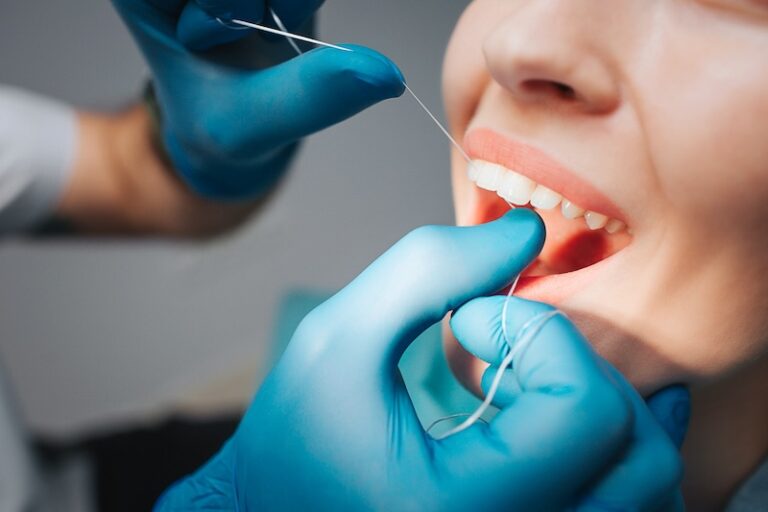
While brushing cleans the visible surfaces of your teeth, it can’t reach the tight spaces between them where food particles and plaque accumulate. Research shows that flossing before brushing is more effective than brushing first. This sequence loosens bacteria and debris between teeth, allowing your toothbrush and fluoride toothpaste to flush away these particles more effectively.
Proper Flossing Steps:
- Start with about 18 inches of floss
- Wind most of the floss around one middle finger, with remaining floss around the same finger of your opposite hand
- Hold the floss tightly between thumbs and forefingers
- Guide the floss between teeth using a gentle rubbing motion (never snap into gums)
- Curve the floss into a C shape against each tooth when it reaches the gum line
- Gently slide into the space between gum and tooth
- Move the floss up and down, following the shape of the tooth
- Use a clean section for each tooth
Alternative Interdental Cleaning Tools
If traditional string floss feels difficult or uncomfortable, several effective alternatives exist:
- Water flossers: Use a gentle stream of water to rinse away particles (ideal for braces or bridges)
- Floss picks: Offer easier handling for those with limited dexterity
- Interdental brushes: Small bristled heads work well for larger gaps or periodontal disease
The key is finding a tool you’ll actually use consistently. Studies show that any interdental cleaning method, when used daily alongside proper brushing, significantly reduces gingivitis and plaque.
Warning Signs to Watch For
Contact your dentist if you notice:
- Gums that bleed when you brush or floss
- Persistent bad breath
- Red, swollen, or tender gums
- Gums that have pulled away from your teeth
While slight bleeding can be normal when you first start flossing regularly, it should decrease as your gum health improves.
Protect Your Gums Starting Today
Healthy gums are the result of consistent, proper care using the right techniques. By dedicating just a few minutes twice daily to thorough brushing and once daily to flossing, you can dramatically reduce your risk of gum disease. Schedule regular dental checkups and professional cleanings every six months for early detection and tartar removal that you can’t eliminate at home.
Ready to take control of your gum health? Schedule your comprehensive dental exam and cleaning at Independence Dental today. Our caring team will evaluate your current oral health, provide personalized instruction on proper brushing and flossing techniques, and create a customized treatment plan to address any concerns. Contact Independence Dental now to book your appointment and discover what exceptional dental care feels like!